
Obama Fails to Learn from His Mistakes in Afghanistan
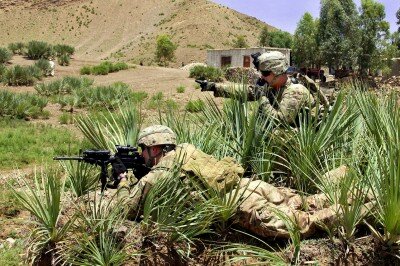 Claiming progress in the war against the Taliban and Al Qaeda, President Obama declared Wednesday that he would withdraw all 33,000 “surge” forces he had authorized 18 months ago, with the initial 10,000 troops leaving Afghanistan by the end of the year.
Obama’s troop drawdown plan was much quicker and larger in number than recommendations by his most senior military commanders who fear a rapid draw down could undo security gains in southern Afghanistan and hamper forthcoming offensives against the Haqqani Network and Al Qaeda terrorists in the east.
Just as the troop withdrawal deadlines he called for during his campaign, and then later as president in a speech at West Point when he unveiled his new Afghanistan strategy in 2009, Obama’s calibration of strategy with a greater focus on politically-motivated deadlines and less emphasis on security realities on the ground is a strategic mistake.
The president tried to rationalize his military timelines in 2009 by arguing that a troop withdrawal deadline would pressure Afghan President Hamid Karzai to curb corruption and improve governance. But the effect was opposite.
Obama’s initial pledge to withdraw troops by 2012 further undermined the effectiveness of the surge. The president’s strategy emboldened the Taliban, strained ties with Kabul, and convinced Pakistan that continued support for the Taliban would be the best strategy to wield influence in post-withdrawal Afghanistan.
Instead of learning from his past mistakes, the president has done the opposite. Mr. Obama has now succeeded in laying out a new and unrealistic timeframe to bring the war in Afghanistan to a close. This timeframe will only serve to undermine U.S. efforts to defeat the Taliban and Al Qaeda and stabilize Afghanistan. It will also, ultimately, cost more American lives.
Both the 2011 and 2012 timeframes for troop reductions coincide with the fighting season in Afghanistan. Troops will begin leaving Afghanistan next month as violence in that country is at its worst in nine years and the Taliban reasserts itself in territories U.S. forces have abandoned.
The deadlines will also weaken the coalition in Afghanistan. Our allies will use Obama’s withdrawals to provide diplomatic cover for their own forces. British Prime Minister David Cameron will use Obama’s declaration of progress in Afghanistan to justify his own troop withdrawals. Canada, Holland, and Poland and many other countries have also announced their own withdrawal dates. It will now be difficult for Washington to convince allies to contribute the troops needed not only to win in Afghanistan, but simply to maintain progress there.
The deadlines also have negative psychological implications. After three decades of conflict, survival is a priority for Afghan leaders and tribesmen, who will not risk backing the United States and the Afghan government if they think Washington will leave them at the mercy of Taliban retribution. In Iraq, tribal chiefs cut ties with Al Qaeda and allied with the United States because the Bush administration pledged it would not abandon them. Obama has made no such commitment to our Afghan allies.
Alas, the president’s hasty withdrawal plan not only gives the Taliban an incentive to retrench and hold on to their arms, but Mr. Obama has now justified the terrorists’ belief that America may have the clocks, but they have the time.
Cross-posted from FoxNews.com
(U.S. Army photo/Sgt. Joseph Watson)

Withdrawal is a Recipe for Failure
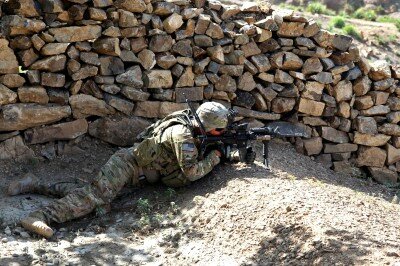 President Barack Obama’s new arbitrary timeline to withdraw all 33,000 surge troops – a third of the US forces in Afghanistan – by next summer is a recipe for failure.
It jeopardises “fragile” security gains of the past one year in Taliban strongholds in Kandahar and Helmand provinces, and undermines the overall counterinsurgency efforts to stabilise Afghanistan.
While the accelerated withdrawal will disappoint American and British commanders in Afghanistan, the news will embolden the Taliban and discourage the insurgents from laying down arms and seeking a peaceful settlement to the decade-long conflict.
Moreover, it will push regional countries, particularly Pakistan and Iran, to bolster their proxies to maximize influence once NATO troops leave the country.
Now that the US forces are beginning to pull out, other NATO allies will follow suit: Prime Minister David Cameron has already pledged to bring home about 450 troops this summer and is expected to order more reductions in coming months despite the military’s warnings. Canada, Poland and many more countries have already set their own withdrawal timeframes.
US officials had hoped the July 2011 deadline Obama outlined 18 months ago would put pressure on Afghan President Hamid Karzai to improve governance and curb corruption. But the effect was quite the contrary: Karzai became more confrontational with the West, made peace overtures to the Taliban, and began to seek alternative foreign allies such as Iran, China and Russia. The new exit timetable will further discourage Karzai from cooperating with the US and NATO allies.
Cross-posted from The Telegraph.
(U.S. Army photo/Sgt. Joseph Watson)
Potential NATO Rival to Fill Security Vacuum in Afghanistan?
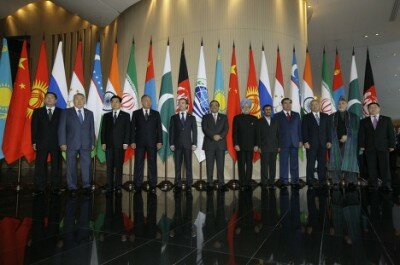 Last week’s Shanghai Cooperation Organization (SCO) Summit in Astana, Kazakhstan, was hailed by Chinese Foreign Minister Yang Jiechi for its “historic significance.” And in many ways it was historic. But for an event that brought together heads of state from China, Russia, Iran, Pakistan, and Afghanistan, the most recent SCO Summit received surprisingly scant attention in the United States. Here’s what you likely missed:
• Participants expressed concern about events in the Arab world while supporting “the drive of regional states in the path of democratic development in accordance with their specific cultural and historical characteristics.”
• Afghan President Hamid Karzai formally requested SCO observer status, which gives non-members the ability to participate in some of the organization’s activities.
• Pakistan and India—already observers—filed official membership applications last year, and Pakistani President Asif Ali Zardari announced his expectation that Islamabad’s submission “will be put on a fast track.” Meanwhile, Indian Foreign Minister S.M. Krishna voiced his country’s desire for “a larger and deeper role” in the organization and said that New Delhi shares the SCO’s goal of a more “democratic international system.”
• “The member states believe that unilateral and unlimited build-up of missile defense by one state or by a small group of states can cause damage to strategic stability and international security,” read a joint declaration. Asked whether Moscow pushed through the statement, Russian Foreign Minister Sergei Lavrov responded, “No one talked anyone into it.”
• Iranian President Mahmoud Ahmadinejad characteristically criticized the existing world order as “managed and run by slavers and colonizers of the past,” adding, “I believe together we [the SCO] can reform the way the world is managed. We can restore the tranquility of the world.”
• In a Moscow Times op-ed on the day of the summit, Kazakh President Nursultan Nazarbayev wrote, “It is possible that the SCO will assume responsibility for many issues in Afghanistan after the withdrawal of coalition forces in 2014.”
Individually, these statements may not amount to much. But collectively, and in the context of an impending U.S. drawdown in Afghanistan, they should raise eyebrows. In some limited respects, the aims of the SCO are comparable to those of NATO in the early years of the Cold War. NATO in the 1950s was an alliance implicitly constructed to—in the words of its first Secretary General Lord Ismay—“keep the Russians out, the Americans in, and the Germans down.” Moreover, with the exception of Portugal, Greece, and Turkey, it was an association of like-minded democracies. The SCO conversely is an association of like-minded autocracies whose raison d’être, from Moscow’s perspective, is to keep the Americans out of Central Asia, the Russians in, and the Chinese down in terms of their overall regional influence.
Islamabad and Kabul want in because they’re convinced that the United States is on its way out of Afghanistan. While Iran’s prospects for full-fledged membership are slim, Tehran’s observer status provides the Islamic Republic with one of its few remaining platforms for international legitimacy. Most troubling, however, is Nazarbayev’s contention that the SCO may need to “assume responsibility” for Afghanistan in the wake of a U.S. withdrawal. The reasons for maintaining a robust presence in Afghanistan have been discussed elsewhere at length and don’t need to be rehashed here. But what hasn’t been discussed is the potential relationship between a considerable and precipitous U.S. drawdown, the inevitable security vacuum that would result, and the emergence of a more cohesive, muscular, and militarily-inclined SCO in Afghanistan and beyond.
Cross-posted from the Enterprise Blog.
(Russian Presidential Press & Information Office)
Is Spain Pulling its Weight in NATO?
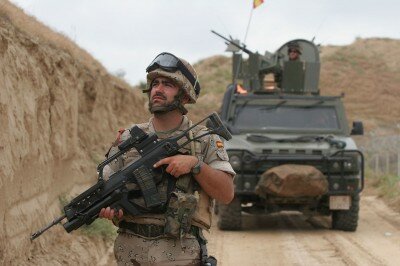 In his final address to NATO defense ministers this month, Defense Secretary Robert Gates urged broader European involvement in the Libyan conflict, warning that tepid commitment on the part of member-states including Poland, the Netherlands, Turkey, and Spain risks weakening the alliance. With regard to Spain, which provides only 6 aircraft to maintain the no-fly zone and scant maritime patrol capabilities, Gates’ comments are valid. Still, Spanish contributions to NATO outside of the Libya operation are not inconsequential, and a change in government could see an even more robust application of Spain’s military capabilities in the world. A shifting political climate within Spain also provides hope for revived partnership with the United States, within the context of NATO and beyond.
Currently, Spain maintains an ISAF mission which amounts to 1,552 troops stationed mainly in the western province of Badghis where it operates 5 Operational Mentor Liaison Teams (OMLTs) and 2 Police OMLTs. Spanish Armed Forces further contribute to reconstruction teams based in the provincial capital of Qala-i-Naw. Despite criticisms of its Libya operations, therefore, Spain’s current contributions to NATO operations deserve recognition to the extent that they enhance the capabilities of Afghan National Security Forces, an essential mission of ISAF operations. And while Badghis is a quieter and more stable province, the Spanish presence there frees other coalition troops for missions in more contested areas.
Spain’s development of cutting-edge military platforms and capabilities is also impressive, and lays the foundation for a more internationally active Madrid. On June 7, for example, Defense Minister Carmé Chacon announced plans to launch the Ministry’s ‘Paz’ satellite equipped with high-resolution radar technology. When completed in 2013, the satellite will make Spain’s the continent’s first military to provide an observation system that would serve both military and civilian purposes, at once enhancing the functional capacity of the Spanish Armed Forces abroad and signaling the development of the domestic aerospace industry, now the fifth largest in Europe. In broader terms, despite its fiscal woes, Spain remains the fifth largest economy in Europe, spending roughly 1.2% of its GDP ($1.434 billion in 2010) on defense (a percentage in the range of many NATO members, e.g. Germany, Denmark, Canada, but well below that of the US).
With regard to its relationship with the United States, Spain’s history provides an important basis for future cooperation based upon the convergence of political interests. Like the United States and Great Britain, Spain is no stranger to terrorism. The bombing of a Madrid train station on March 11, 2004 which left 191 dead and over 2,000 wounded was only one of hundreds of violent terrorist attacks to occur in the country within the past four decades. That the Madrid bombing was perpetrated by Islamic radicals inspired by al-Qaeda, however, highlights Spain’s vulnerability to a terrorist threat beyond the now-inactive Basque group Euskadi Ta Askatasuna (ETA).
Notably, the current Socialist Zapatero government was elected into office days after the March bombings which were widely interpreted as a reaction against Prime Minister Aznar’s support for President Bush’s invasion of Iraq a year before. In moves that signaled a waning of Atlanticism, Spain withdrew its forces from Iraq 2004 and, five years later, withdrew its Kosovo peacekeeping mission, all to the detriment of US-Spanish relations. But as Zapatero’s mandate comes to a close and he is forced to call national elections within one year, American policymakers looking for broader support from Western Europe should be encouraged by the likely ascension of a new conservative Spanish administration more amenable to American security interests.
In regional elections last month, the governing Socialists suffered their worst defeat ever, losing control of all seventeen autonomous communities, indicating that leader of the ascendant Popular Party, Mariano Rajoy, may soon succeed Zapatero as Prime Minister of Spain. Previously, upon the election of Barack Obama, Rajoy had defined the United States as a “society with which we share not only interests, but also essential principles and values,” explaining his party had always wanted the highest possible level of relations with the United States. Though the nature of bilateral relations between the two nations will undoubtedly be tempered by austerity concerns, an even slightly more assertive Spanish defense policy as the result of a transition of power will enhance NATO’s aggregate capabilities and lessen the concerns of those who consider Spain an unreliable ally.
(Spanish Ministry of Defense)
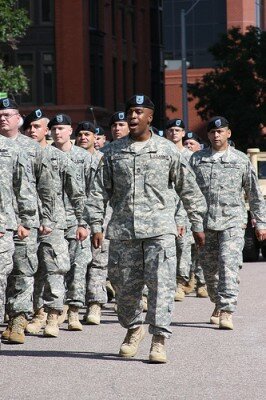
In a side note to the major defense news of past few weeks, the Army has once again decided to change its headgear. The black beret will now no longer be worn with the Army Combat Uniform (although it will still be standard with the more formal Army Service Uniform). In its place, the Army will go back to the patrol cap, a sort of flat-topped baseball cap worn with combat fatigues throughout the 1980s and 1990s. Now, few in Washington defense circles—much less in the greater American population as a whole—spend much time thinking about what soldiers wear on their heads on a daily basis. And for the most part, nor should they. And yet, the story of the rise and fall of the beret teaches a more important lesson for Washington policy circles—the fallacy of transformation on the cheap.
There were good reasons to adopt the beret originally and many more to get rid of it. On the positive half of the ledger, berets, long associated with elite units, can engender pride, build unit morale and, perhaps, even lure new recruits. On the downside, berets provide little protection from the sun, give no ventilation in the heat, require two hands to put on, and demand more maintenance than the more rugged patrol cap that can be carried in a pocket, not to mention thrown into the wash as needed. There are service politics reasons too for minimizing the beret’s wear. Many of the Army’s elite units—Special Forces (aka “the Green Berets”), 82nd Airborne Division and other paratrooper units (the maroon berets) and particularly the Rangers, who had officially adopted the black beret in 1975 before changing to tan during the past decade—were never entirely happy with sharing their iconic headgear with the rest of the Army. There are even budget reasons to minimize the use of the beret. According to one estimate, the demise of the beret will save the Army $6.5 million a year,[1] a rounding error in the overall defense budget but every little bit still helps.
On a deeper level, however, the Army’s adoption and later abandonment of the beret tells a more important, if somewhat ironic, story about military transformation. In November 2000, then Chief of Staff of the Army General Eric Shinseki framed the change in uniform as a response to the perception that the Army was outmoded and facing obsolesce in the post Cold War age. In fact, Shinseki began the official announcement of the uniform change with, “the Army must change to maintain its relevance for the evolving strategic environment.”[2] And in order to maintain this strategic relevance, the Army as whole needed to become more like the special operations community, modeling their “deployability, versatility, and agility” and above all, “their adaptiveness, which keeps them ready to take on any mission, anytime, anyplace.”[3] And so, the logic went: give all soldiers the beret, the headgear of the special operations community, and they begin to think and act like special operators. Put more simply, the concept was change the hat, change the force.
In many ways, Shinseki got his wish. The Army eventually transformed into the force he wanted, although not because of what it wears on its head. The Army officially adopted the beret on its 226th birthday and the first one of the new millennium, June 14, 2001.[4] Less than three months later, the 9-11 attacks plunged the United States military—and especially the Army—into a type of war it was not prepared to fight, one that required the Army to become more deployable, versatile, agile, and adaptable. Arguably, the crucibles of the wars in Afghanistan and Iraq accomplished what no milliner could ever do—force real transformation on the “big green machine” and prove that the United States Army was still relevant, and, more debatably, is the key element in modern war-fighting, even though the Red Army no longer threatens to come pouring through the Fulda Gap. Transformation, however, was a costly endeavor: it took hundreds of billions of dollars, thousands of lives and years filled with blood, sweat and tears for the Army to learn how to fight these new wars. The price of true learning is never cheap.
For most soldiers, the beret is now gone from daily use—speaking for myself at least, not a moment too soon—but ironically enough, the policy debates that prompted its adoption in the first place are back in force today. As Washington scrambles to make budget cuts, there are renewed calls for military “transformation” as a way of saving money or, to put the matter more bluntly, doing more with less. And once again, the Army is front and center on the chopping block. After all, the argument goes: of course, no American president will commit the United States to another ground war in the aftermath of Iraq and Afghanistan, so why not “transform” (read cut) the Army into a leaner, more versatile and more agile version of itself and reap the budget windfalls? And now, like a decade ago, there are calls to transform on the cheap—simply changing hats while cutting budgets and calling it a revolution in military affairs. And yet, the story of the beret should show the superficiality of such a policy. We spent the last decade learning what true transformation is and at considerable cost built a force capable of meeting these new threats. And so, while the Army may be returning to an old hat physically speaking, the cries for transformation on the cheap must not also be old hat.
A former active duty Army officer, Raphael S. Cohen is currently a Ph.D. student at Georgetown University, studying International Relations.
(flickr/Beverly & Pack)
[1] http://www.cnn.com/2011/US/06/13/army.beret/index.html?hpt=hp_bn1
[2] See “CSA SENDS – THE ARMY BLACK BERET” 030011Z NOV 00 http://www.army.mil/features/beret/beret.htm
[3] Ibid.
[4] Ibid.
His Lefty Military
 When a New York Times op-ed columnist starts celebrating the virtues of the U.S. military, Dorothy, you know you’re not in Kansas any more.
On the other hand, the virtue celebrated by Nicholas Kristof in “Our Lefty Military” is hardly a martial one, but rather “one that emphasizes universal health care and educational opportunity.” You can’t make this stuff up.
Kristof laments the “innately hierarchical” organization of the armed forces, and admits that “it may seem odd to seek a model of compassion in an organization whose mission involves killing people” and that it is “unwelcoming to gays and lesbians.” Yet, despite these down sides, he applauds the military’s “day care system for working parents” and its “single-payer universal health care.” In this, he sees a model for the future: “So as the United States armed forces try to pull Iraqi and Afghan societies into the 21st century, maybe they could do the same for America.”
Well, if there is a lesson for society writ large, it’s that a universal, single-payer system is a bankrupting system, to the point where the killing-people part is in danger of falling by the wayside. Over the past decade, the Defense Department’s spending on health care has tripled, approaching an estimated $51 billion per year. It continues to rise even faster than health care costs in the civilian world, and will push to about $65 billion by 2015 – probably more than 10 percent of the baseline (that is, excluding war costs) Pentagon budget.
Departing Defense Secretary Robert Gates has been trying to include defense health reforms in his money saving “efficiencies.” This week, he told the Senate Armed Services Committee that the defense health system is “not sustainable” without higher fees from troops, their families, and the retirees who benefit from very lost-cost programs like “TRICARE for Life.” Adm. Mike Mullen, chairman of the Joint Chiefs of Staff, agreed that military health care costs are “eating us alive.”
The voracious costs of military health care have been an increasing problem ever since the Republican Congresses of the 1990s began to add benefits to an already generous system; new benefits granted in the post-9/11 years have only aggravated the situation. Mackenzie Eaglen of the Heritage Foundation has estimated that annual costs will rise to $90 billion by 2028. Even the liberal Center for American Progress concluded in a recent study that “[t]he cost of military health care could eventually begin to divert funding away from other crucial national security initiatives.” Arnold Punaro, a retired Marine general and member of the Defense Business Board, a group that advises the Pentagon on its finances, recently summed the problem:
We in the Defense Department are on the same path that General Motors found itself on. General Motors did not start out to be a health care company that occasionally built an automobile. Today, we’re on the path in the Department of Defense to turn it into a benefits company that may occasionally kill a terrorist.
That’s probably fine with Kristof, who is ambivalent, at best, about the core mission of the U.S. military. But he’d also, apparently, like to see the entire American republic turned into a health care delivery vehicle.
Finally, the “camaraderie” that Kristof is so fond of is a military means, not a military end. The end, the larger purpose, is killing our enemies.
Cross-posted from the Weekly Standard.
(flickr/The Aspen Institute)
 The U.S. State Department designated al Qaeda in the Arabian Peninsula (AQAP) operative Othman al Ghamdi a terrorist under Executive Order 13224 today. The accompanying press release described Ghamdi’s role in AQAP:
Othman al-Ghamdi is a member of AQAP’s leadership. Al-Ghamdi has been involved in raising funds for the organization’s operations and activities in Yemen. He has also worked with other AQAP members to plan and stockpile weapons for future attacks. Al-Ghamdi appeared in a video released in May 2010, where he was identified publicly as AQAP’s operational commander. In the same video, he appears alongside AQAP’s military commander Qasim al-Rimi and AQAP operative Fahd al-Quso, who is wanted for his role in the USS Cole bombing.
Ghamdi was previously in U.S. custody – he is a former Guantanamo detainee (#184). He is also a so-called “graduate” of the Saudi terrorist rehabilitation program, along with AQAP deputy leader Said al Shihri (#372) and spiritual leader Sheikh Ibrahim Suleiman al Rubaish (#192). According to Ghamdi, whose story is featured in the fall issue of AQAP’s English-language magazine Inspire, he was able to slip the Saudi intelligence officers and escape into Yemen. There, he immediately reconnected with al Qaeda.
Only seven AQAP members are designated as terrorists. Sheikh Ibrahim Suleiman al Rubaish, who appears frequently in AQAP’s media advocating violence against the West, could be an eighth.
(DoD photo/Chief Petty Officer Dave Fliesen, U.S. Navy)
Czeching Out on Missile Defense
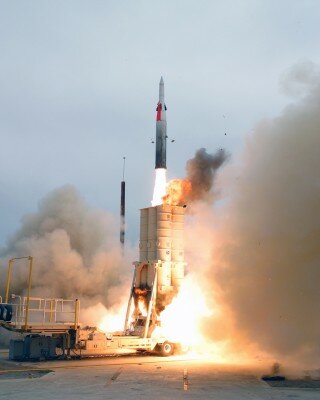 More than a year and a half after the Obama Administration jettisoned its predecessor’s plans for a missile defense interceptor site in Poland and a radar site in the Czech Republic in the face of Russian protestations, Prague has now officially confirmed that it wants no part of the revised “Phased Adaptive Approach” for missile defense in Europe.
After meeting with U.S. Deputy Secretary of Defense William Lynn yesterday, Czech defense minister Alexandr Vondra confirmed that his country will not participate in the current plan for a European missile defense with an early warning center. He earlier derisively called the proposed scaled-down role for the Czech Republic “a consolation prize.” The “official” explanation for the rejection is that NATO’s endorsement of a European missile defense capability makes the proposed Czech early warning center unnecessary. But Vondra’s pique with the Obama Administration was evident when he stated, “Our ideas about the future cooperation are more colorful than just a room or two with some screens there.”
Also yesterday, the Shanghai Cooperation Organization, composed of Russia, China, and the former Soviet Central Asian states of Kazakhstan, Kyrgyzstan, Tajikistan, and Uzbekistan, issued a declaration critical of the proposed European missile defense project. “The member states believe that the unilateral and unrestricted buildup of a missile defense capability by one state or a group of countries can hurt strategic stability and international security,” it stated.
Throwing one of America’s best allies under the bus has neither satisfied Moscow, which continues to object to U.S. missile defense plans, nor enhanced the security of the United States or NATO. It has, however, highlighted the political risks of stiffing allies in an attempt to placate Moscow.
(DoD photo)
How to Compete in the South China Sea
 There is increasing confrontation in the South China Sea, with China asserting claims of sovereignty to a vast area that has long been considered an international waterway. In order to counter Chinese claims and reassure our allies, the U.S. will need a naval presence in the sea. Any American presence, however, is complicated by China’s military build-up. U.S. surface combatants and aircraft carriers are put at risk by a number of Chinese platforms, from “carrier-killer” anti-ship missiles to 4th generation fighters. One of the People’s Liberation Army Navy’s (PLAN) most lethal threats is its submarine fleet, bolstered by forty new subs over the past twenty years.
With these threats in mind, U.S. Navy submarines are excellent candidates to provide a more robust American presence in the South China Sea. But the Navy has a limited number of subs, and a growing number of tasks are expected of them. Further, the overall defense budget needed to build additional subs is declining. How to address these problems?
In yesterday’s Defense News, my colleague Gary Schmitt and I propose a solution: the U.S. Navy should procure diesel subs. Modern diesels, in use around the world by America’s allies and rivals alike, meet the Navy’s qualitative needs, and come at a fraction of the price of nuclear subs. In fact, Gary and I argue that the Navy’s own encounters with diesel subs- in simulations and otherwise- provide compelling evidence for their addition to our fleet:
The U.S. Navy is not ignorant of the advantages of diesel subs. Time and again, American naval crews have struggled to detect their diesel-electric “foes” at sea. Over the past two years, for example, Peruvian and Chilean diesels have made life extremely tough for the U.S. in naval exercises.
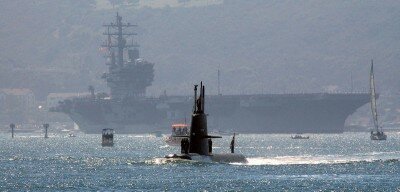
Nor is this new; in a joint training exercise in 2005, a Swedish AIP-outfitted Götland-class sub scored a “strike” on the carrier Ronald Reagan. And, most famously, in 2006 a Chinese Song-class diesel submarine surfaced undetected within striking distance of the carrier Kitty Hawk off Japanese waters.
Read the article for more on why the Navy needs diesel subs.


