
Iraq Needs Long-Term US Troop Presence
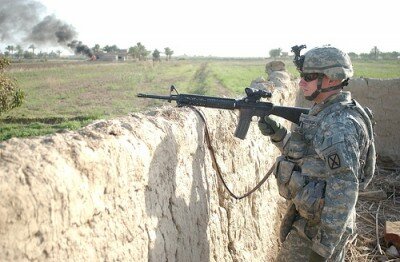 Baghdad and Kirkuk have witnessed a series of violent bombings targeting Iraqi security forces this past week, as Iraq’s leaders meet this month to discuss the extension of a U.S. military presence beyond 2011. AEI resident scholar Frederick W. Kagan argues in a new report that negotiating a security agreement lengthening the presence of U.S. forces in Iraq past 2011 is an urgent national security priority for both Baghdad and Washington. Iraqi leaders, particularly Prime Minister Nuri al-Maliki, face a critical turning point that will determine the future of Iraq and its neighbors. Similarly, President Barack Obama must stay true to his pledge to Iraqis last Thursday that the United States will continue to be a “steadfast partner” by building a long-term strategic military partnership. Here are some of the report’s key findings:
• The absence of a U.S. strategic partnership with and military presence in Iraq will weaken the Iraqi military and could lead to the breakdown of internal security and political gains, which in turn could cause renewed communal conflict and the reemergence of militant Islamist groups. Conversely, Iraqi response to the sense of being abandoned by the United States could lead Baghdad to launch a rapid buildup of Iraq’s military to respond to regional threats, which would further destabilize an already unstable Middle East and badly damage essential efforts by the Iraqi government to meet the desires of its people for domestic progress.
• The presence of U.S. air power and ground troops in Iraq would assure Baghdad of its survival, and at less cost to Iraqi and regional security. The U.S. military can provide Iraq with the ability to hold its own against Iranian proxy groups, to deter and defeat an Iranian conventional military attack or air attack, and to deter or retaliate against an Iranian missile campaign. Internally, the United States could continue to play an irreplaceable role in keeping the peace along the Arab-Kurd fault line in northern Iraq.
• Iraqi leaders must choose what kind of Iraq they want—an independent, fully sovereign state beholden to no one, or a weak state, riven with internal tensions, subject to the constant manipulation and domination of its Persian neighbors. The decision will mark a fundamental bifurcation in Iraq’s future and must not be taken lightly.
The full text of the report is available now.
Katherine Faley is a research analyst for AEI’s Critical Threats Project.
(flickr/U.S. Army photo by Staff Sgt. Martin K. Newton)



