
Corruption Impedes Russia’s Defense Modernization
 According to Russia’s top military prosecutor, Sergei Fridinsky, every fifth ruble Moscow spends on defense is lost to corruption in Russia’s notoriously opaque procurement system. But this should come as no surprise. Transparency International ranks Russia 154th out of 178 countries on its Corruption Perceptions Index—along with Laos, Cambodia, and Tajikistan. And Russia’s defense industry isn’t immune to the broader currents of Russian society. In fact, weapons procurement is arguably more prone to graft because of Kremlin paranoia and the secrecy that surrounds Russia’s military-industrial complex.
Fridinsky believes that a debilitating contributor to inefficiency in Russia’s weapons acquisitions system stems from contractors’ tendency to “turn over” initial payments made by the state. That is, Russian weapons manufacturers receive money for a particular contract but often misappropriate that money for other purposes. The Sarapulsky radio components factory in Russia’s Udmurtia federal district, for example, failed to meet its deadline for several government contracts because it opted to use the state’s advance payment to cover more immediate, yet entirely unrelated, factory costs. Consequently, Russia’s military didn’t receive its contractually stipulated hardware until the end of 2010 rather than the beginning of 2009.
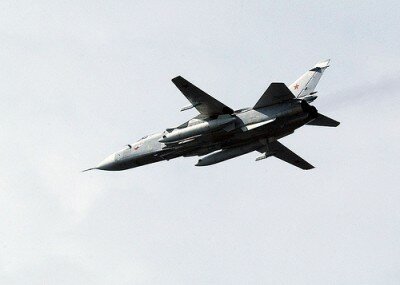
But delays aren’t worst case scenarios in the world of Russian weapons procurement. It’s become common practice for many weapons manufacturers to simply recycle previously developed technologies and to repackage them as state of the art innovations. Fridinsky’s office recently conducted an inspection of 275 fighter jet refurbishment plants and discovered that several factory directors and subcontractors were colluding to reduce expenditures by employing outdated, used, or damaged parts. They concealed this by falsifying technical documents. The plants, in addition to knowingly putting the lives of Russian pilots at risk, cost the state millions in additional expenses.
Similarly, a past inspection in southern Russian revealed that a torpedo factory was presenting its old products as highly modernized improvements—well worth the millions in tax dollars (or in Russia’s case oil and natural gas dollars) being spent on their development. But this particular torpedo plant was a repeat offender. A more recent inspection exposed that the plant, having learned that it can’t merely repackage its own products, was now importing obsolete torpedo components from abroad. So much for Russia’s purported self-sufficiency in defense.
Such accounts are particularly relevant in the context of Russia’s ongoing military modernization program, which will nominally include an investment of $720 billion during the period 2010-2020. Last week President Dmitry Medvedev fired the heads of several weapons plants and a number of Defense Ministry officials because arms manufacturers failed to meet the state’s deadline for new weapons. The entire affair was very Soviet. Not only did the Kremlin set specific targets but Medvedev reminded those fired that back in the good old days they would have all been sent to labor camps. Much like in Soviet times, however, the dismissal of officials won’t stimulate the type of change needed to transform the Russian arms industry into an efficient and reliable procurement system. If Fridinsky’s figure is correct then Russia will lose roughly $144 billion to defense-related corruption over the next decade. A large fraction of the remaining $576 billion will likely be spent on marginally updated armaments whose technological sophistication remains rooted in models developed during the late Soviet era. What the Kremlin doesn’t understand is that Russia’s endemic corruption represents more of a threat to its national security than NATO ever will.



