
Can Britannia Rule the Waves without Carrier Strike?
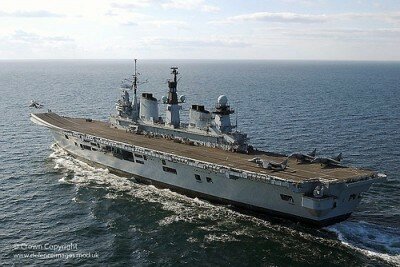 A report released last week by Britain’s National Audit Office (NAO) calls into question the future of the Royal Navy’s aircraft carrier program. This report follows last year’s Strategic Defence and Security Review (SDSR), an overhaul of the British armed forces resulting from the new Tory government’s decision that significant cuts to the British defense budget were necessary in light of the U.K. fiscal crisis. Among the more notable decisions was to mothball the Royal Navy’s carrier fleet along with the associated air wing. The SDSR did, however, recommend continued procurement of two new carriers, arguing that the costs associated with stopping construction were sufficiently steep that it made more sense to go ahead with the program—although the review also indicated that it was highly likely that only one of the two carriers would be put into active service and certainly not before 2020. But the NAO report puts into question whether even this is likely unless “there is a real terms increase in defence funding in the latter half of the decade.”
Complicating matters is that the eventual bill for maintaining a carrier strike capability is still uncertain. According to the NAO, the precise costs are still undetermined, and will not be fully assessed until late 2012. This is not all that surprising given the scale of the program, and the decision to install catapults on the carrier deck and equip the carrier with F-35Cs rather than the Royal Navy’s traditional “jump jets,” but it does suggest that, unless there is a marked increase in defense spending starting in 2015, the British government will face another significant round of cuts to its defense capabilities.
Upgrades aside, the fact is that the Royal Navy is out of the carrier business until the next decade. And, even then, only 150-200 days of available carrier strike are expected per annum. However dismal this prospect may be, arguably, it would be worse still from a British perspective to lose a carrier strike capability altogether. The new Queen Elizabeth-class would extend Britain’s global reach, afford interoperability with American and French navies and amount to a major qualitative upgrade from the now mothballed Invincible-class. But whether the UK can afford even this capability is a serious question that the NAO report has, with a loud plop, put on the table.



